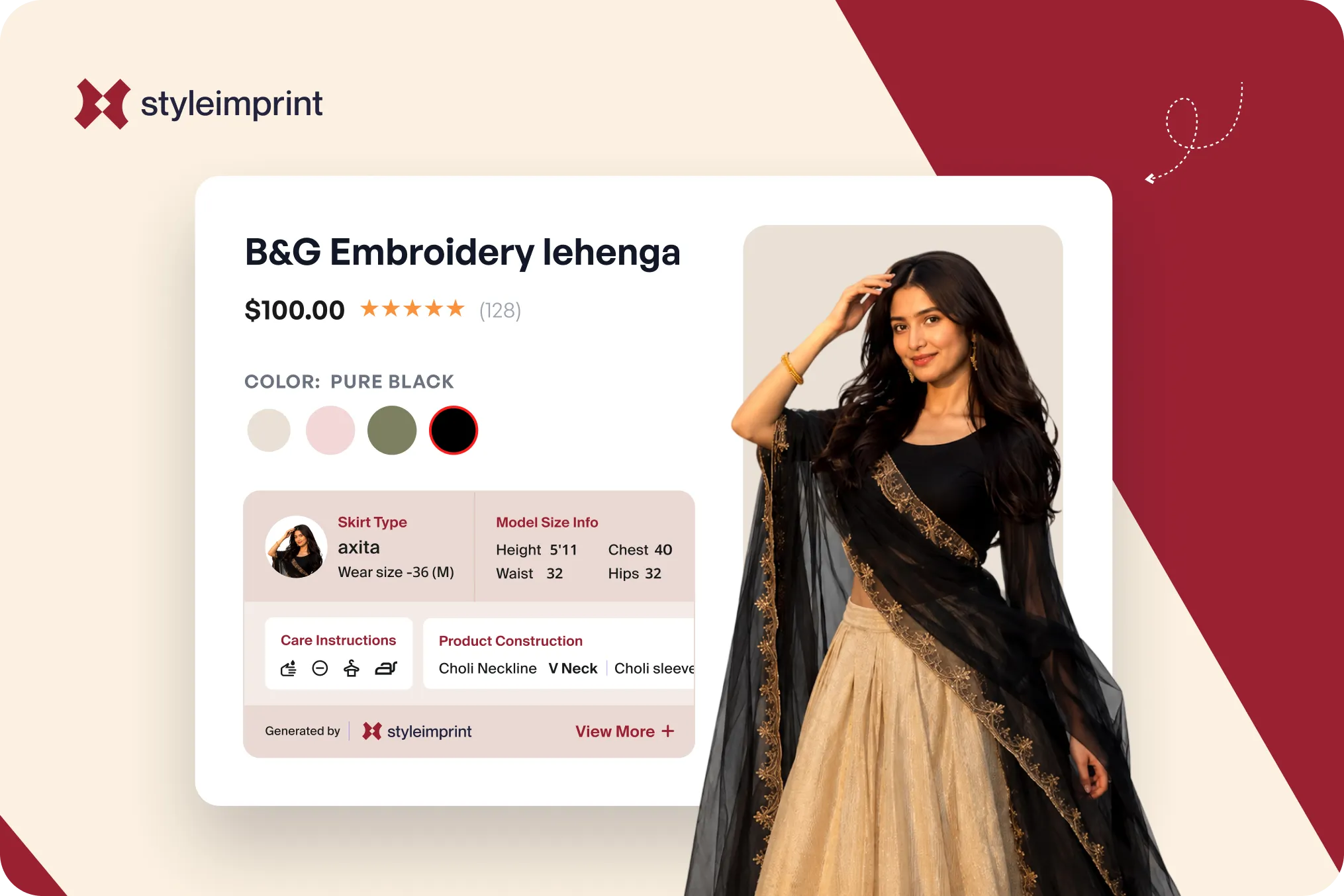
A lehenga is not one garment. It is three: the choli or blouse, the lehenga skirt, and usually a dupatta. A single size dropdown that says S, M, L is being asked to describe a top, a bottom, and a drape all at once, and it cannot. This is why lehenga sizing online goes wrong so often, and why so many lehenga orders end in an alteration, a return request, or a disappointed bride.
The fix is not a better size chart. It is understanding that a lehenga page has a different job from a dress page. It has to communicate fit across two separately sized garments, it has to declare how finished the product is before the shopper can even know what to measure, and it has to handle the fact that the most important sale in this category, the bridal one, is frequently made to order. This is the playbook for getting that right on Shopify.
Why lehengas break standard sizing
Several things about a lehenga defeat a single size label, and they stack.
It is a top and a bottom that can differ. A shopper can be one size on the blouse and another on the skirt. A single garment size forces them to pick one and hope, which is exactly the uncertainty that kills a high-value purchase.
The blouse is often customized. Neckline, back design, and sleeve are frequently chosen or altered, so the choli needs its own measurement set, not just a chest size. Bust, shoulder, armhole, and sleeve length all matter independently.
Length depends on height and footwear. A lehenga skirt is commonly around 41 to 44 inches, but the right length is set by the wearer’s height and the heel she plans to wear. A fixed length on the label is a starting point, not an answer, which is why length is a measurement, not a size.
There is a third piece. The dupatta is part of the set, and whether it is included, and how it is meant to be draped, is information the shopper needs and the size dropdown has no room for.
Silhouette changes the fit. An A-line, a flared ghagra, a mermaid, and a straight-cut lehenga wear differently at the same measurements. The silhouette is part of how the shopper predicts fit, and it belongs on the page.
The stitch-type question comes first
Before any measurement is useful, the page has to answer one question: how finished is this lehenga? This single fact decides what the product page should ask the shopper for, and it is the field most stores forget to state clearly.
Stitched, or ready-to-wear. The lehenga arrives finished in fixed sizes. Here a body-measurement size chart is exactly right, mapping sizes like XS to XXL to bust, waist, hip, and length in inches. This is the one case where a chart genuinely applies.
Semi-stitched. The most common format for festive and bridal wear. Typically the skirt is pre-stitched while the blouse and dupatta are left unstitched, with seam margin so the piece can be tailored and let out to the buyer’s measurements. This page needs a measurement form, not a size chart, because the shopper is providing the numbers that will finish the garment.
Unstitched. Fabric and components only, fully made to measure. Here the page needs fabric quantities and what is included, since there is no built fit to describe yet.
State the stitch type at the top, in plain words. A shopper who buys a semi-stitched lehenga expecting a ready-to-wear one is a guaranteed complaint, and it is entirely avoidable with a single label.
The full measurement set a lehenga page needs
Because a lehenga is two garments, it needs two measurement sets. Show them as structured fields, clearly grouped, so the shopper or their tailor can read them at a glance.
For the choli (blouse): bust, shoulder width, armhole, sleeve length, and blouse length, which is commonly around 14 to 15 inches but is regularly customized.
For the lehenga (skirt): waist, hip, and lehenga length, measured from the natural waist to the floor with the intended footwear on, commonly landing around 41 to 44 inches.
On top of those two sets, the page should carry the stitch type, the silhouette, the fabric, the occasion, whether a dupatta is included, and the care. And because so much of the fit decision is visual, showing the model’s measurements and the size she is wearing helps the shopper map the lehenga onto her own body, just as it does for any other garment.
Ready-to-wear and bridal are two different pages
A 4,000-rupee ready-to-wear festive lehenga and a bridal lehenga sold as a made-to-order piece are not the same product, and they should not use the same page. The ready-to-wear page is a confidence play: show the size chart, the measurements, the silhouette, and the model, and let the shopper self-serve to a quick decision. The bridal page is a trust-and-process play: the shopper is committing serious money to a garment that will be tailored, so the page has to set expectations clearly, explain how measurements are collected, state production and delivery timelines, and make the stitch type and customization options unmistakable.
The mistake is running the bridal sale on the ready-to-wear template, where a single size dropdown and a thin description leave the most important purchase a customer may ever make full of unanswered questions. Treat the bridal page as the considered, high-touch page it needs to be.
Common lehenga product page mistakes
The recurring problems on independent lehenga stores are consistent and fixable. A single S, M, L applied to the whole set, when the blouse and skirt size separately. No stitch type stated, so the shopper does not know whether to expect a finished garment or a tailoring project. No length or height guidance, so the skirt arrives wrong for the wearer. The dupatta left unmentioned. And the blouse reduced to a chest size when neckline, shoulder, sleeve, and length all matter. None of these is exotic. They are the predictable result of selling a three-piece, often-tailored garment on a template built for a one-piece, ready-made one.
Fixing this by hand across a catalogue rarely happens, which is why the gaps persist. A lehenga-specific template solves it structurally: StyleImprint ships a Lehenga template with fields for stitch type, the two measurement sets, silhouette, dupatta, occasion, and care, and reads existing product data to fill what it can, so the page shows the right blocks for the format instead of a borrowed size dropdown. Sarees follow their own logic, covered in the saree product page playbook.
The short version
A lehenga is three garments and two measurement sets, not one size. Lead the page with the stitch type, because stitched, semi-stitched, and unstitched each ask the shopper for something different. Show the choli measurements and the skirt measurements as separate, structured blocks, state the silhouette, the dupatta, and the care, and treat the bridal sale as a considered, made-to-order page rather than a ready-to-wear one. Drop the single S, M, L dropdown for everything except genuinely stitched, ready-to-wear pieces. The shopper is not confused by lehengas. The page is. Fix the page.
Frequently Asked Questions
What measurements does a lehenga product page need?
A lehenga is three pieces, so it needs two measurement sets. For the choli or blouse: bust, shoulder width, armhole, sleeve length, and blouse length (commonly around 14 to 15 inches). For the skirt: waist, hip, and lehenga length (commonly around 41 to 44 inches, measured from the waist to the floor with the intended footwear). The page should also state the stitch type and whether a dupatta is included.
How do I sell lehengas online on Shopify?
Lead with the stitch type, because it decides everything else. A stitched lehenga needs a body-measurement size chart, a semi-stitched lehenga needs a measurement form for the parts that are tailored, and an unstitched lehenga needs fabric quantities. Then show the full measurement set, the silhouette, fabric, occasion, dupatta status, and care as structured blocks rather than a single S, M, L dropdown.
What is the difference between stitched, semi-stitched, and unstitched lehengas?
A stitched lehenga is ready to wear in fixed sizes. A semi-stitched lehenga usually comes with a pre-stitched skirt while the blouse and dupatta are left unstitched for tailoring to the buyer, with margin allowance to let it out. An unstitched lehenga is fabric and components only, fully made to measure. Each one changes what the product page must ask the shopper.
Why doesn't a single size like M work for a lehenga?
Because a lehenga is a top and a bottom that can be different sizes on the same body, the blouse is often customized in neckline and sleeve, and the skirt length depends on height and heel. One letter cannot carry a blouse fit, a waist, a hip, and a length at once, which is why ethnic-wear sizing uses a measurement set rather than a single size.